Books I Read Last Week – Part 1 (Aug 6-12, 2012)

Last week has been miserable in terms of the amount of reading I’ve done. It has also been the first (extended) week of my blogging here so I guess I am dividing time between blogging and reading. Further, I’ve been very busy at work and at home as well, due to which I couldn’t concentrate on reading much.

But this is what I read last week:

1. Joy in the Morning
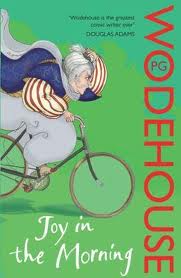
by: P.G. Wodehouse
Literature and Fiction / Humor
Status: Half Read, Still Reading

As I am a big admirer of books by Wodehouse, it is quite difficult for me to not read one of his classics. This week, I’ve started reading Joy in the Morning, another classic novel from the Jeeves and Wooster series. Till now, Bertie Wooster has refused Boko and Nobby to cooperate in their second scheme to sacrifice him for making poor old Boko look good in Uncle Percy’s eyes. At the same time, young boy scout Edwin has burnt down an entire house as a result of his act of kindness. Sadly, I haven’t been able to finish this during the week but I plan to keep this as my target in the coming week.

This book also belongs to the series of the Books I Like to Read Before I Sleep which is another blogs posting of mine.
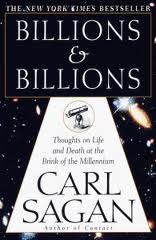
2. Billions and Billions – Thoughts on Life and Death at the Brink of the Millennium
by: Carl Sagan
Science / Astronomy / Philosophy
Status: Half Read, Still Reading

Being a staunch admirer of everything that the great Carl Sagan has ever written, it is truly amazing to read his books like Cosmos, Pale Blue Dot, The Demon Haunted World, etc. This week, I’ve started reading Billions and Billions chapter-by-chapter. My intention is not to read the entire book at once because most of the chapters are dealing with different topics so it is possible to read each chapter even after some gap of time. Till now, I’ve read Dr. Sagan’s musings on how, in human history, the significance of numbers has increased and Millions led to Billions led to Trillions. I especially enjoyed Sagan’s light-hearted commentary on observing how people all over the media were increasingly attributing the phrase “Bbillions and Bbillions” to him, despite him having never uttered it even once in his popular television series: Cosmos.
Overall, An excellent read.

What about next week?

I plan to finish Joy in the Morning and Read Billions… a little more. Would you like to recommend me a nice book?
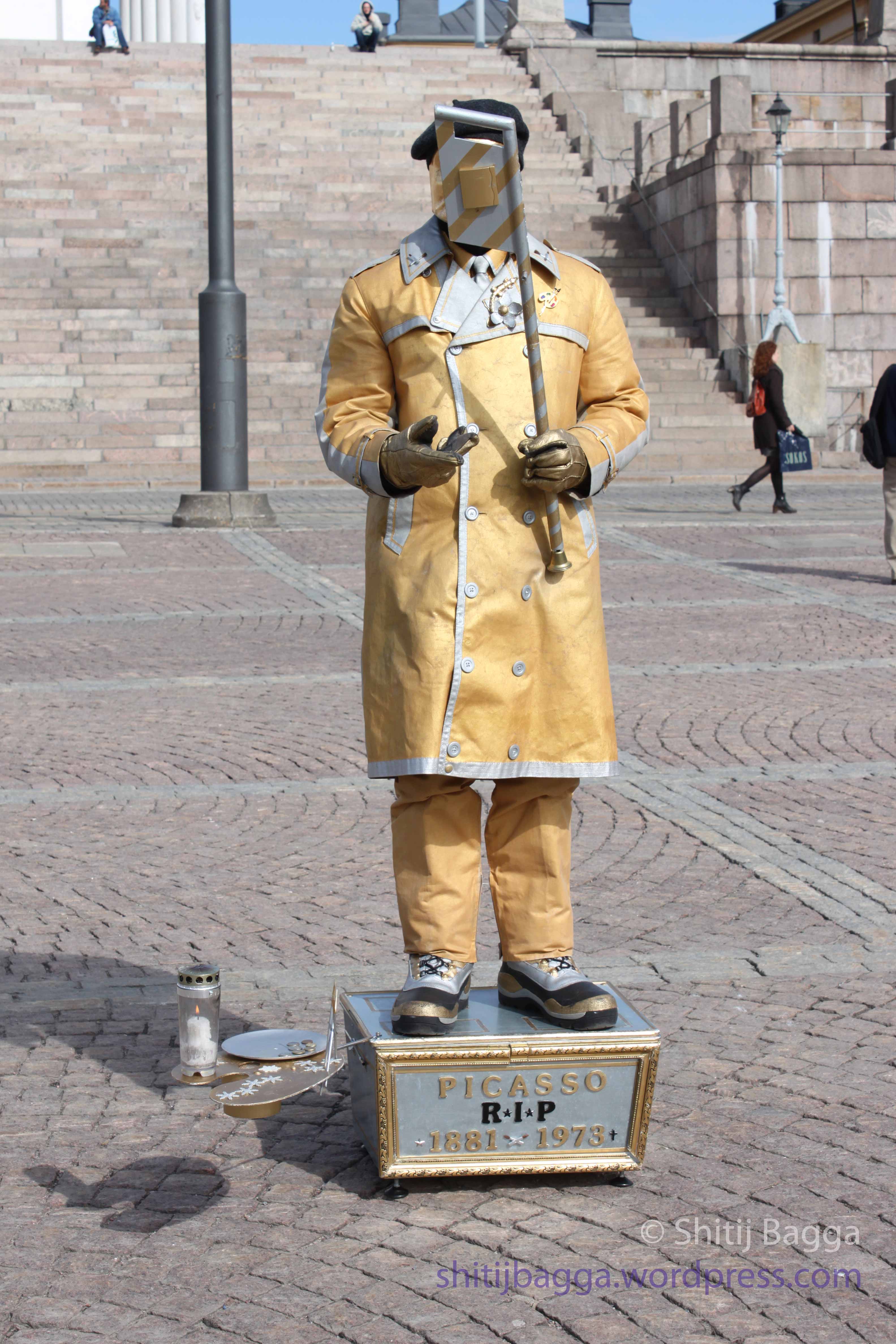
Costumed Picasso in Helsinki

Across Europe, in all the major cities, you will find some people in eye catching costumes according to a certain theme offering themselves to be photographed by and with tourists for a small fee in return. In the above picture, I observed this man dressed as Picasso and he stood on this small podium for hours and hours amazingly without moving more than posing for a picture for tourists who paid a Euro or for blocking other tourists like me from photographing him.

This picture was taken when I was in Helsinki, Finland last year. This was outside the Cathedral.


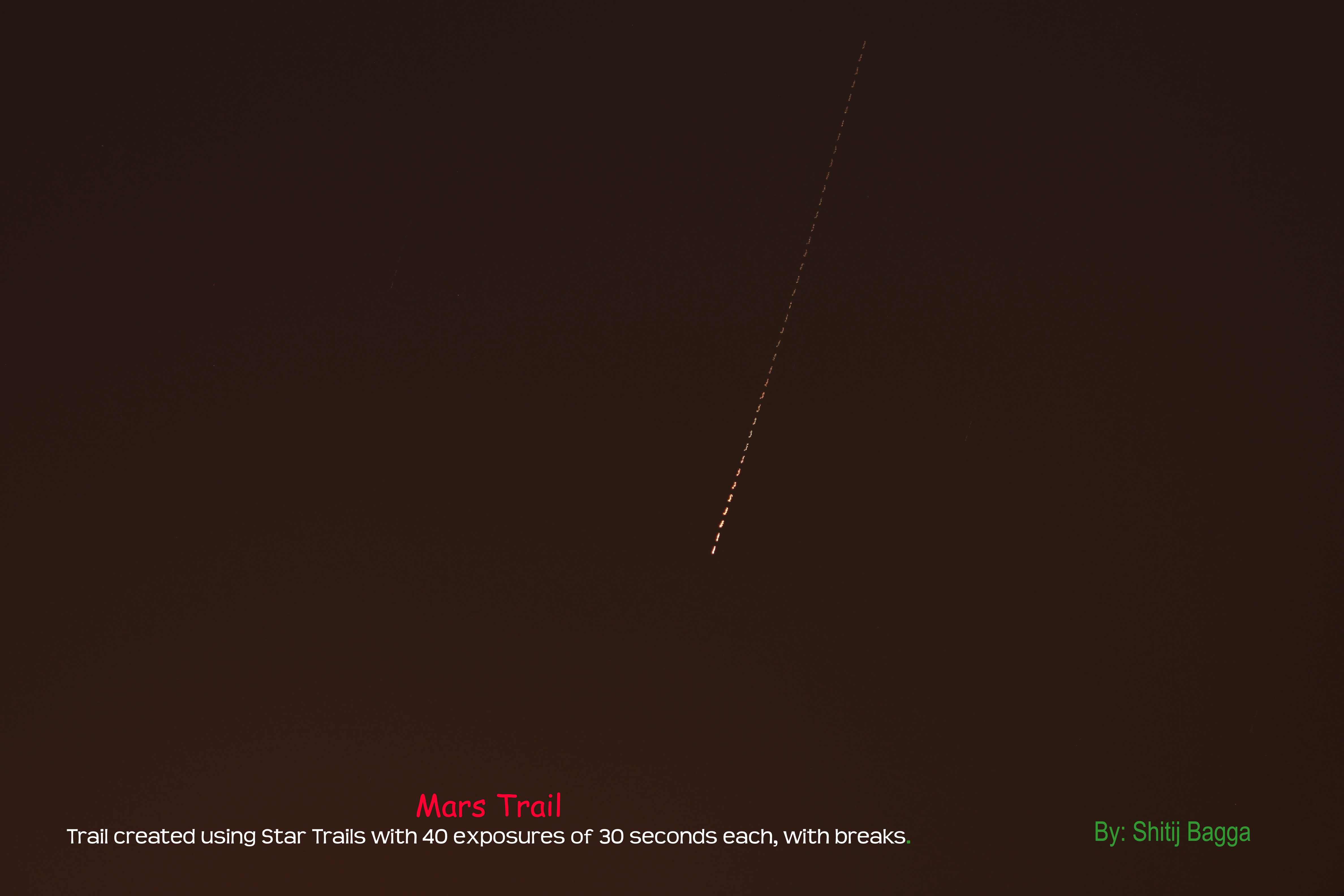
Mars Trail Astrophotography

My Photograph of Mars trail created with 40 exposures of 30 seconds each, with regular breaks. Shots taken using my Canon EOS 500D from my rooftop in Noida (near Delhi, India).

There’s a Murphy in my Office

Most of you must have heard about Murphy’s Law. I am listing below the laws that are applicable to our workplaces. Am sure most will agree with these. Have Fun!

  • The printer is either out of toner or there is no paper only when the client asks for 10 copies of a 120 page report by evening.
  • The network would snap just when you were explaining an important point over a NetMeeting conference call.
  • All mails except the most important one, which was sent way before, will find their way into your inbox.
  • The client will call only when you had left for a coffee break. And when you call back, he/she won’t be available in office.
  • When its a busy day for you, all your colleagues would be chatting just outside your cabin.
  • When you don’t have much work… all your colleagues will be busy.
  • The display settings on your computer will play havoc only when you have to finish a presentation by afternoon.
  • The better your presentation, least the impact.
  • The frequency of mailing performed by a person varies in inverse proportion to the amount of work at hand.
  • Assaf’s Laws of Paperwork
    — When there are two possible forms to fill out on any given matter, the wrong form is always filled out at first.
    — The wrong form is not discovered until it has been signed by all parties concerned, sealed, and delivered.
  • Assaf’s Corollary
    — Once the right form has been filled out, signed by all parties concerned, sealed, and delivered, it turns out it was filled out wrong.
  • Paper is always strongest at the perforations.
  • The 90-90 Rule of Project Management:
    — The first 90% of a project requires 90% of the allotted time. The remaining 10% takes another 90% of the allotted time.
  • When reading this page at work your boss will pop-up (behind your back) and ask you why aren’t you working.

OverBOOKed

Too Many Options?

I am a voracious reader. And a compulsive-obsessive book collector. For me, genre is not and has never been a barrier. Science, Philosophy, History, Politics, Literature & Fiction, Biographies, Psychology, you name the genre and I have read something related.

So, it is imperative for me to carry a book wherever I go. Whether I am going to office in the morning, or visiting friends and relatives over the weekends or simply out for break, I always need to carry a book with me. I am building my personal space for books, a mini-library if you may. As of now, it contains over 130 books (as of last official count), all of which I have bought in the last 2 years. That basically means 1.3 books a week. And most importantly, each of those titles has been purchased after careful deliberation on my part.

That is not to say that I am reading a lot of books in practice or that I must be a speed reader. No, I am hardly able to cover a book in less than 2 weeks and there is a very bad reason for it. I don’t seem to have the time for it. When I am travelling to office every morning, I read for about half an hour. Then I start to feel sick because of reading in a moving car (does that to me a lot). In the evening, I reach home quite late and it is only when I get into bed that I continue the book. Needless to say the tiredness of the entire day gets the better of me and every night I fall asleep with the book still held open in my hands. Yes, every single night. Next morning, the cycle continues.

Weekends are when I really cherish the idea of reading a lot. I have mostly been able to pick up a book and, provided there are no distractions, have been able to enjoy my reading quite a lot. On the whole, I think I have read at least 110 of those 130, but having 20 unread books can sometimes be very troublesome. Let me explain.

I sometimes get into a phase, in which I have termed myself as being ‘Overbooked’. It is a state in which I am eager to start/continue reading a book but I am unable to decide which one. For instance, should I read ‘The Republic’ by Plato that I bought a long time back and really want to get through, or should I pick up from where I left off with my PG Wodehouse collection? Things get complicated when, simultaneously, it occurs to me that I have recently bought Sam Harris’s ‘The Moral Landscape’ but deep within my heart, I really now need to read Christopher Hitchens’s ‘Hitch-22’, an autobiography that I have secured in a plastic bag since last 2 yrs for the fear of it catching even a mote of dust. I could even read up the 2nd volume of Stephen Fry’s autobiography, titled ‘The Fry Chronicles’. But, Truth be told, there is no greater masterpiece like the ‘Sherlock Holmes’ collection that I have. So, basically, I am spoilt for choices.

Sometimes, this phase can get really frustrating and absorbing, with the result that I spend most of my energy in this futile attempt at decision-making and end up reading nothing at all. But I often wonder why this happens to me and it might make you wonder if I am simply a spendthrift who keeps buying books by the dozen but does not care to read them.

But it’s not that I don’t care, for I purchase every single title after very careful deliberations and am very touchy about the condition of each book in my collection. I take care to even wash my hands before I take out some of the special books form my library. It is just that I do feel spoilt for choices and with the kind of affection I have for my books, it is somewhat like having many girlfriends, all of them being equally amazing (well, not really), but you can’t spend time with all of them together. I know I could have used a better analogy and this one might make me sound like a nerd or a geek who really doesn’t understand the difference between women and books, but I hope you will not judge me on this because I do understand the difference and never mix the two.

Has this ever happened to you, being spoilt for choices and feeling actually frustrated about it? If yes, I would love to know what you do in such a situation. How do you come out of such a dilemma when you are spoilt for choices? Please share your experiences with me.

Eratosthenes and the Circumference of the Earth

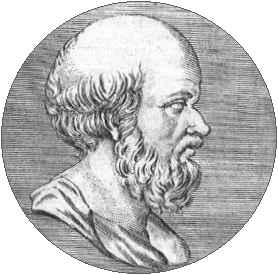
Portrait of Eratosthenes

Eratosthenes was an astronomer, historian, geographer, philosopher, poet, theatre critic and mathematician, who lived in the 3rd century BC in the greatest metropolis of the age, the Egyptian city of Alexandria. His envious contemporaries called him ‘Beta’, the second letter of the Greek alphabet, because they said, Eratosthenes was second best in the world in everything.

However, it was quite an underevaluation of the greatness of the man.

He was the first person to use the word “geography” and invented the discipline of geography as we understand it. He also invented a system of latitude and longitude.

He was the first person to calculate the circumference of the earth with remarkable accuracy. He was also the first to calculate the tilt of the Earth’s axis (also with remarkable accuracy).

The story of the calculation of Earth’s circumference is very interesting. Eratosthenes was also the director of the great library of Alexandria. There, one day he read in a book that in the southern frontier outpost of the ancient Egyptian city of Swenet (known in Greek as Syene, and in the modern day as Aswan) on June 21 at noon, the Sun would appear at the zeith, which means directly overhead. Thus on this day at this time at this location, a vertical stick would cast no shadow. On the summer solstice, June 21 (the longest day of the year), as the hours crept towards noon, the shadows of the temple columns drew shorter and shorter. At noon precisely, the reflection of the Sun could be seen in the water at the bottom of a deep well.

This was a fairly simply observation that someone else might easily have ignored. What significance could sticks, shadows, reflections and wells  have on the simple everyday matters? But Eratosthenes was a scientist and his musings on these commonplaces changed the world; in a way they made the world.

Eratosthenes had the presence of mind to do an experiment, actually to observe whether vertical sticks cast any shadows at noon on June 21 in Alexandria as well. And his discovery was that they do.

Eratosthenes asked himself how, at the same moment, a stick in Syene could cast no shadow while a stick in Alexandria, could cast a pronounced shadow.  In case, at both places had there been no shadows, or had the shadows been of equal lengths, it would have been easy to explain considering the earth to be a flat surface and the Sun’s rays to be inclined in both cases at equal angles. This would have been easily explainable. But this was clearly not the right explanation under the present observation.

Hence, the only possible answer that he saw was that the surface of the Earth was curved. Not only that, the greater the curvature, the greater would be the difference in the shadow lengths.  Since the Sun was so far away, its rays falling on any two locations on the Earth can be considered parallel for all practical purposes. Thence, according to the difference in shadow lengths between the two observations, Eratosthenes was able to calculate that the angular separation of Alexandria and Syene to be of 7 degrees along the surface of the Earth and this 7 degrees was approximately 1/50th of 360 degrees, which was the total angular circumference of the Earth. Knowing the distance between the two cities was approximately 800 Kms, because he hired a man to pace it out, Eratosthenes was able to calculate that 800 Kms times 50 is 40,000 Kms and so that must be the circumference of the Earth.

It was a brilliant deduction, especially in an age where the only tools he had available for this scientific experiment were a few sticks, eyes, feet and brains. Most importantly, he had a taste for experimentation, a thirst for knowledge and a curiosity to understand the basic tenets of nature, which were all ahead of his own age.

The story of Eratosthenes and how one man changed our understanding of our world is an awe inspiring example of the power of scientific inquiry and inquisitiveness. He drew his conclusions objectively from the observed facts of the world and not according from his personal wishes and preferences.


Further Reading:

“Cosmos” by Carl Sagan (book)

http://www.pbs.org/wnet/hawking/cosmostar/html/cstars_eratho.html (online reading)


DETECTIVE HIRED TO FIND GOVERNMENT

A really nice and hilarious blog…

shovonc's avatarINDIA UPDATE

Concerned citizens are in the process of hiring a detective to find the government, which has been absconding since August, 2011.

“We looked all around for clues, but we couldn’t find any,” said one of them. “That’s why we decided to hire a professional.”

Early favourite Sherlock Holmes has dropped out of the race, as he is busy locating missing cast members from the Olympic Opening Ceremony, one of whom was apprehended yesterday in Croydon. NDTV sleuth Arnab Goswami has also declined, citing prior commitment to yelling. Home-maker Purnima Patel’s offer of her mother-in-law has been rejected, despite assurances that ‘she can poke her nose anywhere.’

“We are currently considering Professor Higgs, of Higgs-Boson fame, provided his rate is reasonable,” said a concerned citizen. “If he can find something that small, he can find anything.”

View original post

My Attempts to Read That First Novel

During my school days, I remember, a lot of other kids used to pass time reading some books while travelling in the school bus or while bunking classes. At that time, I was not introduced to reading as a hobby and so obviously I found it a little mysterious how some of them could actually read books which were over a 100 pages thick. Don’t take me wrong, I did do a lot of reading of my own, but it was always comics and never any serious reading like novels. And it is also not that I don’t consider reading comics as requiring an equal zeal, but reading novels was something different for me. Something unattainable.

Finally, when I was in class 10, one of my uncles visited us and when he went back, he incidentally forgot his Jeffrey Archer novel called “A Matter of Honor.” This was the first novel ever to lie around in my home in my memory and a few weeks passed and it kept calling to me. Many times, I would pick it up, check out its pages and cover and then put it down again, not sure what would happened if I opened it, until a day arrived when I could just not resist anymore.

I cannot forget this book ever because of the number of time I tried to read it and failed. I clearly remember the first time I started reading it, I went on for 5-6 pages before putting it down. Why? Because I just couldn’t understand anything. Few days later, I tried again and almost reached the end of the first chapter. Still nothing. So I quit again. I think I tried a few more times and the only thing I remember even now from that first chapter was the name Romanov and I guess some terms related to Russia. I guess it was just too much and the information was too new for me to understand. Finally, one time I decided to read on after reaching the end of Chapter 1 onto Chapter 2. I really compelled my self to continue reading even if it did not make sense and see what happens. And as I read more and more I started to understand what was happening and it turned out that I was actually enjoying it a lot. It grew upon me with such pace that I could not sleep at nights because I was so engaged in it and it took me a few days to finish my reading. (Come on guys, it was my first book).

I think that book changed my life because it encouraged me to read more and more. Starting with other books of Archer and then going on to read Sydney Sheldon and others, reading quickly became a habit that I haven’t been able to give up even 13 years after that first novel. Today, not a days passes without me reading at least a few pages from one of the hundreds of books that I own and keep in my bedroom.

Now that I think about it, I was very fortunate that my uncle forgot that book at my home. And I feel it was really good that I did not give up on that book despite failing to so many times in my attempts to understand what reading was all about.

Today, reading is my life’s greatest passion, a sort of obsession, and I am happy that I got into it and it will always be something that I can never give up.

Books I Like to Read before I Sleep – Part 1

It is absolutely essential for me to read a few pages of a nice book just before I go to sleep. This really has to be the last thing I do at the end of the day simply because it is such a calming influence on my mind. To be engaged with a light hearted stress busting book just before sleeping is an excellent idea and needless to say there would be many others echoing my thoughts on this.

This is the first part of a series of blogs that I will write and in each I will talk about a specific book or series of books that I love to read especially before I go to sleep. Daily!

P.G. Wodehouse: Any of the 14 Jeeves and Wooster Novels

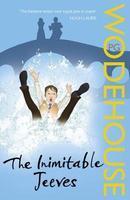
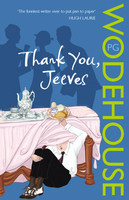
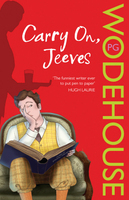
In my opinion, there has not and will never be anyone to match the sense of humor and writing style of the great P.G. Wodehouse. I cannot list any one of his Jeeves and Wooster novels here because I think all of them are equally magnificent. It is splendid to read the mis-adventures of Bertie Wooster What Ho!-ing all over London trying to help his friends and relatives but invariably getting sucked into one hilarious problem after another himself until the genius Jeeves comes to the young master’s rescue. Accompanied by bigger idiots but extremely likeable Bingo Little, Tuppy and Gussey, not to forget the wrath of Aunts Dahlia and Agatha, this splendid writing is really hard to put down. Ever since I read the first novel by Wodehouse, I have started to collect all of his works and it truly is a great collection.

One of my fellow bookworm friends once said that she did not get into Wodehouse novels because she had the impression that it is something that school-going kids are supposed to read. But I vehemently disagree. The writings of Wodehouse are timeless, ageless and fit for reading by people of all ages, classes, shapes and sizes.

As Bertie Wooster once commented:
“We Woosters do not lightly forget. At least, we do – some things – appointments, and people’s birthdays, and letters to post, and all that – but not an absolutely bally insult like the above.”

As Stephen Fry, who has played the character of Jeeves on the television adaptation of these novels, has often said about the works of Wodehouse:

“You don’t analyze such sunlit perfection, you just bask in its warmth and splendor.”

My advice is to start with “The Inimitable Jeeves.” then “Carry On, Jeeves” and if you really get into the craze, continue with the rest of the series.

Do you agree with my analysis?

To read more about P.G. Wodehouse, visit: http://en.wikipedia.org/wiki/P._G._Wodehouse

The complete list of Jeeves and Wooster Novels, visit: http://en.wikipedia.org/wiki/P._G._Wodehouse_bibliography#Jeeves