On Not Writing

frustrated-snapped-pencil

For a long time now, I’ve been missing from the blogosphere. 40 days to be precise since I wrote my last blog post, I spent a lot of time assimilating what it meant to be ‘not writing’. Of course, there are times when a writer has something to say, and at other times, he has nothing to say. But there are times, when the writer has a lot to say but cannot due to the fear of being judged.

Being alive means going through a multitude of situations and emotions which inevitably arise from – as well as lead to – choices that we make. And these choices define who we are and where we are headed. Being a writer – and a candid one at that – simply adds another dimension to this in which he relives his choices and deals with them again through a character, a situation or even an opinion expressed in his writing. All this while, he is aware and afraid that he is putting himself under the microscope because more than anyone else recognizing him, it is his own heart that knows.

The most important ingredient in good writing is writing from the heart and that is where one runs the risk of exposing oneself to the world. I would imagine many writers writing in a manner that completely conceals their own selves behind a cloak that they create. But it takes a lot of courage for a writer to project his real self into his works – allowing one’s own mistakes, regrets, insecurities, disappointments and disheartenments to find form in the writing.

Will someone recognize the writer in the content and see him for what he really is?

And so, by exposing one aspect of my dilemma while simultaneously, and possibly, concealing another, I present this post to the criticism of the reader. I only hope that the reader will understand my absence and be lenient in judging my style of writing though I might leave many in a more confused state than when they began reading. Some of the drawbacks of being an amateur, I guess?

The benefit of falling ill

illnessFalling ill is not always that bad, so long as you don’t catch anything nasty. Specially, if you are regularly working hard and are hardly ever with free time to do what you would otherwise do on an ideal day off. There is always “something” to keep you occupied and away from what you want to do.

So, today was that day for me. I’ve been feeling ill all throughout the day but it isn’t fever or anything. Seems some internal tiring or exhaustion, I cannot say.

Anyway, I spent most of the day working from home, since most of the work was unavoidable, but afterwards I did what I had wanted to do for years. I remained in bed and watched TV for almost 5 hours straight. And, I was watching my favorite channels like Nat Geo, Discovery and Animal Planet. Every hour passed by in a soothing manner, watching new and wonderful things these channels showed today, right from Air Crash Investigation to wildlife programs with snakes, lizards and crocs. It kept me relaxed for a very long time and I really enjoyed everything. I also wanted to read a bit but I knew that would stress me even more because I would need to sit in a proper posture, whereas watching TV was the laziest thing possible.

Now, it is close to midnight and it has just occurred to me that I could perhaps blog about it and encourage others to take a break for their own sake and do something calm and enjoyable even if it is as simple as reading a book or just watching TV. It really charges up your batteries and gives your mind a break from the everyday hassles of life.

I have switched off my TV now and would probably fall asleep next but I would like to know from you if you would also fancy the idea of falling ill once in a while to escape the grilling demands of everyday life and just relax. Do leave me your comments and tell me if you like this.

The Joys of Stargazing

Star Gazing

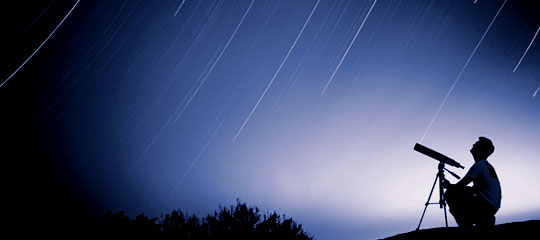
It was almost 4 AM on a chilly December night (or morning) in Delhi a few years back and I stood on the open terrace of my house gazing up at the night sky with my telescope. The sky was clear at last, there was no moon and so it was a good time to look for those otherwise hard-to-spot stars and star-clusters. To read the sky map, I had a torch double wrapped with red cellophane paper so as to prevent it from ruining my eyes’ acclimatization to the darkness.

Astronomy, or rather Amateur Astronomy, was a new hobby of mine, only a few months old. I had recently been reading as much as I could on the subject, joined the local Astronomy club, met and spoke to other passionate enthusiasts and even bought myself a 5-inch Newtonian reflector scope, which has become one of my most prized possessions. Reading on the subject and then spending time contemplating that knowledge gave me a new perspective.

Tonight, as I was gazing at the stars and contemplating the vastness of the universe beyond those skies, I started to get goosebumps. There are about a hundred billion stars in each of the hundred billion galaxies in our universe and I guess almost all of the stars will have their own solar systems – some big, some small. So that makes the number of planets in the universe so large that it is beyond comprehension of ordinary human brains. And yet, despite this vast number, we know of not a single other planet, except our own, to bear life.

“Who are we? We find that we live on an insignificant planet of a humdrum star lost in a galaxy tucked away in some forgotten corner of a universe in which there are far more galaxies than people.”

Of course, being the only known (to us) life bearing planet, makes our place quite special in the universe. And what makes us even more special is the fact that we are able to contemplate our existence and ask questions about our own origins and the origins of the universe and then seek answers to them using our own intelligence. We were formed out of the same starstuff that makes the rest of the Cosmos – the planets, stars, comets, asteroids as well as the galaxies billions of light years away from our own – and we have evolved to think and ask questions about ourselves.

“The nitrogen in our DNA, the calcium in our teeth, the iron in our blood, the carbon in our apple pies were made in the interiors of collapsing stars. We are made of starstuff.”

Yet, on the other hand we also know that the reason why we haven’t been able to find life elsewhere in the universe is not because it does not exist, but because we are not intelligent enough and capable enough of finding out. The vastness of the universe trumps our little brains. The gigantic interstellar distances dwarf by trillions and trillions of times any distances we have seen on our earth or even in our solar system. The cosmic clock runs on a scale that trumps the longest lifetimes of humans and make us insignificant. And so, as the contemplation went on and on in my head, I lost myself into an even longer train of thoughts and it was as if I was slowly being removed from the earth. And finally, I truly realized that my relation to the universe was far greater than I had ever imagined before. I had become one with the Cosmos, not in the usual religious way, but in a much deeper and meaningful way. Because as Carl Sagan said it so beautifully:

“The Cosmos is also within us. We are made of star-stuff. We are a way for the Cosmos to know itself.”

It is a unique perspective because it also makes me realize how precious our planet really is. We have our friends, family, idols and enemies all here on this planet. It is our home. Everybody we have ever known lives or lived here. Outside of it, there is just loneliness in the vast universe. That also makes everybody I know here that much more special. The apparent insignificance of my own existence is in itself the reason why I should continue to live because this is the only life I have and will ever have. And I am lucky to be here today. When I learn something about the universe, it is basically the universe learning about itself. When I look out at the Cosmos, the Cosmos looks back into me.

My thoughts are interrupted by a sudden strong cold breeze and I realize that I am now shivering. I hear a truck pass by somewhere in the distance but otherwise the night is very quiet. It is almost morning and the darkness is fading away. A bit like the darkness of my ignorance is fading away because of the knowledge of my own real self?

I am quite tired now so I gather my stuff and head back inside for bed, leaving my telescope behind as it continued to gaze endlessly at the cosmos beyond.

Remembrance of things past

Sometimes, I look back into my life to see how much of it was real and how much was made up. It is an important question and applies to everyone who ever lived. Not that I am a liar, but I admit that sometimes our sheer vulnerabilities make us believe in something that isn’t true. Sometimes we know that, and sometimes we don’t.

Make up a lie, and believe in it with all your heart and repeat it for a really long time, and you will see it becomes the truth. Children do this all the time. They imagine a world and then believe in it such that it becomes the truth for them. When you were a kid, don’t you remember taking credit for jokes that someone else said, or a story that someone else told? And over the years, at some point, didn’t that joke or story become truly yours? Or what about believing someone else’s ideas as your own?

Likewise, even as adults we are not so far behind. Every journey into the past is complicated by delusions, false memories, false naming of real events. Words that were never said, fights that never really happened, love that was only in my mind, plans that were never made, feelings that were never felt, letters that were never written and friends that never were. But repeat them often enough, and they become real. Our memories also deceive us.

“When I was younger I could remember anything, whether it happened or not; but my faculties are decaying now, and soon I shall be so I cannot remember any but the latter. It is sad to go to pieces like this, but we all have to do it.” ~ Mark Twain

Yes, every life has it. We all remember that which never happened. It is tough to admit it, but its true. Each life is like a book but with some untrue short stories. And many of these, we don’t even know are lies.

“Remembrance of things past is not necessarily the remembrance of things as they were.” ~ Marcel Proust

Reader’s Block

Is there such a thing as a Reader’s Block?

About 2 months back I wrote a blog on Writer’s Block that I was suffering from, and still do from time to time. And about 4 months back, I wrote another Blog called OverBooked, in which I described another situation similar to my Reader’s Block but with a peculiar difference.

In Overbooked, I spoke about how I felt spoilt for choices when it came to choosing what book to read simply because I have too many books and could not make up my mind on any one of them. But now, I write about my Reader’s Block, wherein I do want to start reading, but I want to know that with every page I turn I am gaining something important. I want to know that my life is much better, even by the tiniest bit, because of the last page I just read. I just don’t want to read for the pleasure of reading, for that pleasure I will inevitably find in whatever I read. I want to read because I would be miserable if I did not. And so, the book needs to be one which can remove that misery and fill the hole that is there in my heart.

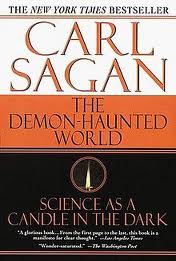
For instance, when I read “A Demon Haunted World” by Carl Sagan about a year ago, every line I read gave me sheer pleasure of the wonderful writing of Dr. Sagan and every page I turned made me feel my life was that much more enriched because of what I’ve read. Similarly, there have been books like “The God Delusion” by Richard Dawkins, “Cosmos” by Carl Sagan, Sherlock Holmes, “IACOCCA” by Lee Iacocca, “The Diary of a Young Girl” by Anne Frank and (oddly enough) “Confessions of a Conjuror” by Derren Brown, all of which have made me feel better about having read a book from which I am taking away something.

And, so I started reading “Relativity” by Albert Einstein this evening, hoping to understand the world much better and peep into the mind of the man who stunned the world with his genius. It is a good book and challenges your intelligence but it isn’t what I want, though I will still finish it very soon.

But now, I am stuck again, this time not for choice but for content. The book I read needs to give me something of intellectual value, where each page turned makes me happier than before. Something, that I should be proud of having read. A book that gives me a reason to be happy or a book that destroys my closely held prejudices. But most importantly, a book which upon opening makes me forget the world. It’s a tough choice because what I might see as an intriguing read might be boring to someone else. I keep remembering this quote I found on the internet:

Always read something that will make you look good if you die in the middle of it.  ~P.J. O’Rourke

So, please dear reader, help me out and suggest a book that you think I will open and then lose myself. Please leave your suggestions in the comments section.

Thanks for reading!

What can you not live without?

When one is faced with a dilemma, on choosing one of two possible and opposite options, how does one decide?

Do you look at what you can live with?

Or

Do you look at what you can’t live without?

These are two very different questions, though they may stir the same thoughts in the mind of the thinker.

For example, if you are a writer and not such a success at that, you would ask yourself what is more important:

Can you live with unsuccessful writing?

Or

Is it that you can’t live without writing at all?

Another example, you want to gain someone you love, but that will bring some issues along with them and so wouldn’t you ask yourselves:

Can you live with the person + issues?

Or

Is it that you can’t live without that person you love?

Which of these is more important? What you can live for or what you will die without?

Blinded by Astrology?

Looking up at the stars, I know quite well
That, for all they care, I can go to hell.

— W. H. Auden

Of late, I have been having conversations with people and who are ardent proponents of Astrology, as well as with my own inner self that just doesn’t agree with this, and it is with a heavy heart that I conclude that humanity will always be split between believers and non-believers. Though it may seem plainly unreasonable to non-believers like me why there are people who live their lives aligned to their horoscopes and star charts, it is still a sad reality that there isn’t much we can do about it. Except that we can take to fighting this social evil in a case to case basis and only when we are ourselves affected by it.

But even then, you sit with someone who seriously follows astrology and you will realize how difficult it is to talk to them. The first point they make is, “I know it works because I have seen it work. And ever since XYZ happened, I am a hundred percent sure that it works and I will never dare to ignore astrological predictions anymore.”

Try and counter this with a rational argument citing examples of how terribly wrong these predictions can be at most times, and you are cut-off in between by something like, “I understand you may not want to believe it but I can tell you that it really does work. Now, of course I cannot explain how it works, but you must take my word for it, as also consider the testimonials of countless others whose lives have been positively affected by recognizing this science. It is an ancient “vidya” (Hindi for body of knowledge) and there are only a few real masters of this vidya while all others are lesser practitioners and that is why you find some predictions that may turn out to be incorrect.”

Now, this is obscene. Can you imagine a science teacher teaching like this in a science classroom:

“Now, when I say that the sum of all interior angles of a triangle equals 180 degrees, you must trust me on this and take my word for it. I have studied mathematics in college and am far more educated than you are so you must trust me. I agree that your other maths teacher gave you proof yesterday that sum of all angles is 160 degrees, but very few people have more knowledge on this subject and so you must trust me.”

What if, at the end of each year at college, instead of having exams to test students’ knowledge, we could simply read their horoscopes to know how much they would score in each subject and then grade them accordingly? Wouldn’t it save a lot of time, effort and money on part of both the teachers and the students?

What if schools decide that instead of asking students what streams (like engineering, law, medical science, business, etc.) they wanted to specialize in, they simply read the horoscopes of each one and allot subjects accordingly? “Greg’s horoscope says doctor, Henry’s says Lawer, Patrick’s says he’s gonna have a short life so let’s just expel him.” Wouldn’t that be brilliant?

Why do we vote for governments every few years when we could easily just publish the horoscopes of every man in the country and then pick the best of those for the top job? Why don’t we let horoscopes decide which players are going to excel today and pick only them in the team?

Why hire judges and lawyers in courtrooms when the outcome can even be decided by the local astrologer by reading the horoscopes of the  aggrieved parties?

Let me tell you the answer to all these WHYs and the answer is that we don’t know anything for sure. We don’t know what is going to happen and that is the way the world is. It is depressing that we do not have satisfying answers to all our problems, we want to define why somethings happen while others don’t so that we can bring some sort of order to our lives.

We have no command over our futures and nobody knows anything for sure but being human means dreaming, aspiring, working hard, fighting the odds and if we take these elements out of our lives, then being human means nothing different from being just another animal.

In my conversations with believers, my point is never to convince them this astrology business is a fraud and hopeless. I know people, including me, have fear of the unknown and who am I to deny someone their right to feel better even if it means a little bit of superstition? And I also know that rational arguments will rarely convert a staunch believer. But what I always do say is that “You can never know for sure” and so when it comes to decisions of life and death, of someone’s happiness, dreams, aspirations of people that we care about, let us not be so cruel as to flaunt our arrogance of “knowing for sure” and forcing them to confirm to what a piece of paper with some boxes and numbers drawn on it says about them.

Let us be superstitious, but let us also draw a line between what is harmless superstition and what is harmful with life-altering and devastating consequences.

Because, if it is indeed true that everything that happens and is going to happen in this world is already written in some star charts, then doesn’t it make life, effort, love, hate, ambition, success, dreams and all human experiences pointless? Isn’t it demeaning to be told that all your dreams and efforts mean nothing just because your horoscope said something will not happen? And if the horoscope does fail, you dismiss the failure as a lack in completeness of knowledge of such a complex “science”?

Doesn’t it diminish the essence of being human whereas?

What do you think?

“There are two ways to view the stars: as they really are; and as we might wish them to be.” – Carl Sagan
Everybody Lies

“It’s a basic truth of the human condition that everybody lies. The only variable is about what. The weird thing about telling someone they’re dying is it tends to focus their priorities. You find out what matters to them. What they’re willing to die for. What they’re willing to lie for.”

“Dying people lie too. Wish they’d worked less, been nicer, opened orphanages for kittens. If you really want to do something, you do it. You don’t save it for a sound bite.”

Two very nice and thought-provoking quotes from House MD.

Which quotes do you like?

There’s a Murphy in my Office

Most of you must have heard about Murphy’s Law. I am listing below the laws that are applicable to our workplaces. Am sure most will agree with these. Have Fun!

  • The printer is either out of toner or there is no paper only when the client asks for 10 copies of a 120 page report by evening.
  • The network would snap just when you were explaining an important point over a NetMeeting conference call.
  • All mails except the most important one, which was sent way before, will find their way into your inbox.
  • The client will call only when you had left for a coffee break. And when you call back, he/she won’t be available in office.
  • When its a busy day for you, all your colleagues would be chatting just outside your cabin.
  • When you don’t have much work… all your colleagues will be busy.
  • The display settings on your computer will play havoc only when you have to finish a presentation by afternoon.
  • The better your presentation, least the impact.
  • The frequency of mailing performed by a person varies in inverse proportion to the amount of work at hand.
  • Assaf’s Laws of Paperwork
    — When there are two possible forms to fill out on any given matter, the wrong form is always filled out at first.
    — The wrong form is not discovered until it has been signed by all parties concerned, sealed, and delivered.
  • Assaf’s Corollary
    — Once the right form has been filled out, signed by all parties concerned, sealed, and delivered, it turns out it was filled out wrong.
  • Paper is always strongest at the perforations.
  • The 90-90 Rule of Project Management:
    — The first 90% of a project requires 90% of the allotted time. The remaining 10% takes another 90% of the allotted time.
  • When reading this page at work your boss will pop-up (behind your back) and ask you why aren’t you working.

OverBOOKed

Too Many Options?

I am a voracious reader. And a compulsive-obsessive book collector. For me, genre is not and has never been a barrier. Science, Philosophy, History, Politics, Literature & Fiction, Biographies, Psychology, you name the genre and I have read something related.

So, it is imperative for me to carry a book wherever I go. Whether I am going to office in the morning, or visiting friends and relatives over the weekends or simply out for break, I always need to carry a book with me. I am building my personal space for books, a mini-library if you may. As of now, it contains over 130 books (as of last official count), all of which I have bought in the last 2 years. That basically means 1.3 books a week. And most importantly, each of those titles has been purchased after careful deliberation on my part.

That is not to say that I am reading a lot of books in practice or that I must be a speed reader. No, I am hardly able to cover a book in less than 2 weeks and there is a very bad reason for it. I don’t seem to have the time for it. When I am travelling to office every morning, I read for about half an hour. Then I start to feel sick because of reading in a moving car (does that to me a lot). In the evening, I reach home quite late and it is only when I get into bed that I continue the book. Needless to say the tiredness of the entire day gets the better of me and every night I fall asleep with the book still held open in my hands. Yes, every single night. Next morning, the cycle continues.

Weekends are when I really cherish the idea of reading a lot. I have mostly been able to pick up a book and, provided there are no distractions, have been able to enjoy my reading quite a lot. On the whole, I think I have read at least 110 of those 130, but having 20 unread books can sometimes be very troublesome. Let me explain.

I sometimes get into a phase, in which I have termed myself as being ‘Overbooked’. It is a state in which I am eager to start/continue reading a book but I am unable to decide which one. For instance, should I read ‘The Republic’ by Plato that I bought a long time back and really want to get through, or should I pick up from where I left off with my PG Wodehouse collection? Things get complicated when, simultaneously, it occurs to me that I have recently bought Sam Harris’s ‘The Moral Landscape’ but deep within my heart, I really now need to read Christopher Hitchens’s ‘Hitch-22’, an autobiography that I have secured in a plastic bag since last 2 yrs for the fear of it catching even a mote of dust. I could even read up the 2nd volume of Stephen Fry’s autobiography, titled ‘The Fry Chronicles’. But, Truth be told, there is no greater masterpiece like the ‘Sherlock Holmes’ collection that I have. So, basically, I am spoilt for choices.

Sometimes, this phase can get really frustrating and absorbing, with the result that I spend most of my energy in this futile attempt at decision-making and end up reading nothing at all. But I often wonder why this happens to me and it might make you wonder if I am simply a spendthrift who keeps buying books by the dozen but does not care to read them.

But it’s not that I don’t care, for I purchase every single title after very careful deliberations and am very touchy about the condition of each book in my collection. I take care to even wash my hands before I take out some of the special books form my library. It is just that I do feel spoilt for choices and with the kind of affection I have for my books, it is somewhat like having many girlfriends, all of them being equally amazing (well, not really), but you can’t spend time with all of them together. I know I could have used a better analogy and this one might make me sound like a nerd or a geek who really doesn’t understand the difference between women and books, but I hope you will not judge me on this because I do understand the difference and never mix the two.

Has this ever happened to you, being spoilt for choices and feeling actually frustrated about it? If yes, I would love to know what you do in such a situation. How do you come out of such a dilemma when you are spoilt for choices? Please share your experiences with me.